Toegang tot Innovatie
 Toegang tot Kapitaal
 Toegang tot Talent
 Toegang tot Markt
 Toegang tot Kennis

Impact Coalitie Safety & Security Community Event: Together for a Safe Society

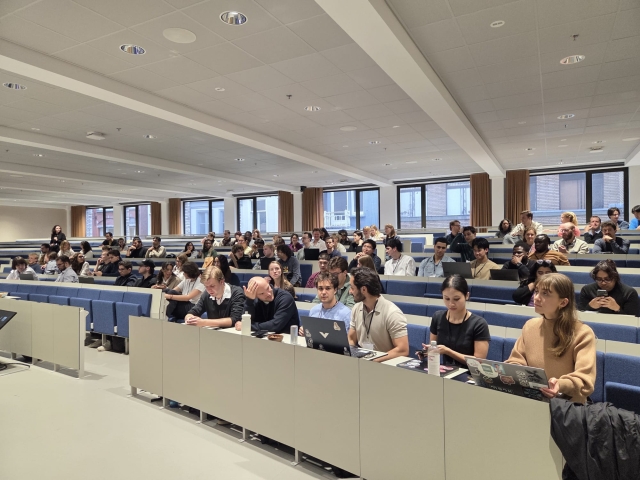
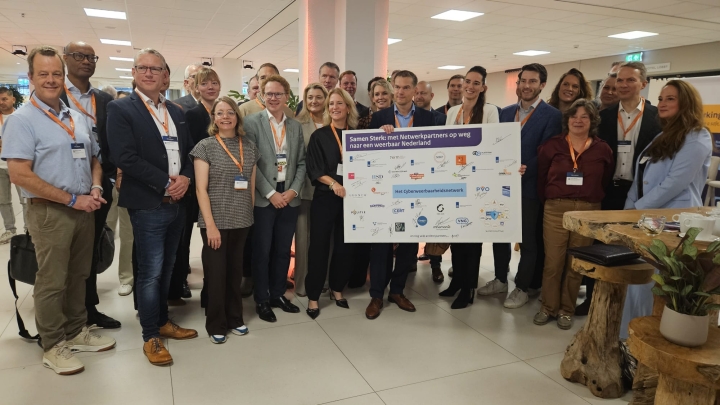
On September 11, the ICSS Community Event took place in Scheveningen, bringing together over 50 participants from municipalities, the police, Security Delta (HSD), VNG, and various knowledge institutions. It was an inspiring day filled with knowledge sharing, the exchange of practical experiences, and discussions about future developments.
Living Lab Scheveningen
The day began with a guided tour along the boulevard through the Living Lab Scheveningen. Why is it called a “living lab”? Because it stands right in the middle of public space — not an isolated test site, but a place where everyday life continues while innovative pilots are actively underway. It’s a space where experimentation and reality go hand in hand.
A few of the use cases:
- Smart lampposts: These multifunctional light poles are equipped with various sensors, such as AI cameras that count pedestrians and cyclists. The sensors measure crowd levels in real-time. Using this sensor box, which signals when it becomes too crowded, the municipality monitors and manages visitor density on the pier. The lampposts are an integral part of the smart infrastructure network and serve as inspiration for similar poles throughout the city.
- Drone detection: Despite no-fly zones, drones are regularly spotted over The Hague. Using four detection sensors installed on rooftops across the city, the municipality and police gain better insight into when and where drones are flying. The next step is to develop a policy framework for drone flights.
- Smart waste bins: Solar-powered bins equipped with sensors that measure how full they are. This allows for more efficient waste collection routes and prevents overfilled or overweight bags.
- Smart beach grid: Smart energy grids help absorb peaks in energy consumption, for example, by temporarily storing energy in batteries for later use. The municipality is also experimenting with a local energy cooperative, where users agree on how to share energy. The goal is to create an energy system that is reliable, affordable, and sustainable.
- Digital information boards: Dynamic information screens warn beach visitors about dangerous sea conditions. They complement existing static signage by displaying up-to-date, targeted messages, increasing visibility, and enhancing beach safety.
The Living Lab is all about experimentation, learning, and knowledge sharing — a place where innovative solutions are tested directly in practice to improve Scheveningen’s living environment.
Measuring Noise in The Hague and Almere
After lunch, the first presentations focused on noise monitoring.
- In The Hague, measurements are being taken in three nightlife streets, including Herenstraat, to better map noise disturbances and explore possible solutions.
- In Almere, city-wide measurements have been conducted since 2025 at fixed locations, allowing the municipality to gain insight into noise levels and respond effectively to nuisance. The installation of these sensors followed a careful Data Protection Impact Assessment (DPIA) process to safeguard residents’ privacy.
Fieldlab Arena Amsterdam
Fieldlab Arena showcased how the City of Amsterdam, the police, and the Johan Cruijff Arena collaborate to ensure a pleasant and safe environment — during events and beyond.
Examples include:
- Nudging and light art to promote use of the F.A. Warnerspad: To guide visitor flows comfortably, lighting along the path was improved, and artistic light installations were added. This created a safe and attractive alternative route, easing congestion and improving crowd flow during events.
- Augmented Reality and collaboration with influencers: Engaging local youth through interactive technology and creative campaigns.
- Innovative police tools: Such as the recently introduced Selection Pole for random search checks — a supporting tool that complements, rather than replaces, police professionalism.
- Interactive police tape with QR codes: Adding information and reporting functions to the barrier tape so citizens can stay informed and involved in real time.
Camera Surveillance & AI
The VNG and Police presented their 10 Principles for Camera Surveillance (151c). Together, they are developing a practical framework while exploring the role of Artificial Intelligence. The next phase will define what is technically possible, legally permissible, and socially desirable.
Future Foresight
The day concluded with a Future Foresight session posing the question:
“What do you think the world will look like in 10 or 20 years concerning cybersecurity?”
This sparked a wide-ranging discussion, from public safety to data governance and the evolving role of technology.
Safety in Public Space
In the short term, new approaches are emerging to enhance the sense of safety — including nudging techniques and crowd measurement through mobile data. Street harassment remains an urgent issue, demanding both technological and policy-driven solutions. Drones bring new risks, leading to discussions about stricter regulations — where only registered drones would be allowed, helping prevent low-cost “cobra drone” attacks. Manipulation of cybersecurity data is a growing threat, and both IT and OT systems remain vulnerable. As the digital and physical worlds intertwine further, this convergence must also be reflected in governance, expertise, and capacity building.
Control over Human Decision-Making — and the Role of AI
Who will be in control in the future? Will humans be guided by technology? Will the tech industry dominate? Or will humans remain in charge?
AI brings both opportunities and concerns. While it can make autonomous decisions, it risks diminishing critical thinking and human agency. Some imagine a future where humans do less and technology does nearly everything — though technological progress can also lead to medical breakthroughs and improved healthcare.
Data Sharing & Data Sovereignty
Collaboration through shared infrastructure — such as shared hardware — is becoming essential to enable secure data exchange. Combining subjective data (like personal experiences) with objective sources (such as camera footage) can provide valuable insights, especially when local entrepreneurs contribute their perspectives. The key question is: who controls the data?
Will it remain in the hands of citizens, or will it shift to corporations? We must avoid a digital panopticon controlled by municipalities or large market players. Ethical discussions about the use of technology are therefore crucial.
Youth and the Future of Technology
Younger generations have grown up in a world where technology is the norm — but what does that mean for shaping the future?
Is the government too cautious? European legislation consistently lags behind rapid technological developments. There may also be a gap between what authorities define as “safe” and what society experiences as such. Young people may have very different views on what is ethically acceptable from today’s 50+ policymakers. Policymakers often lack insight into how digitally native youth think and act — for example, an AR tool might already seem “old-fashioned” to them.
It is therefore essential to involve young people in shaping the digital future.
A warm thank you to all participants for your active contributions and open exchange. Together, we continue to build a smarter and safer society!
Impact Coalitie Safety & Security is a collaboration between municipalities, the police, knowledge institutions, businesses, VNG, and Security Delta. It acts as a catalyst and agenda-setting platform for cities, accelerating the adoption of smart city innovations that enhance urban safety and security. 
Betrokken HSD partners