Access to Innovation
 Access to Capital
 Access to Talent
 Access to Market
 Access to Knowledge

Research into the Digital Resilience of Municipal Infrastructure Kicks Off

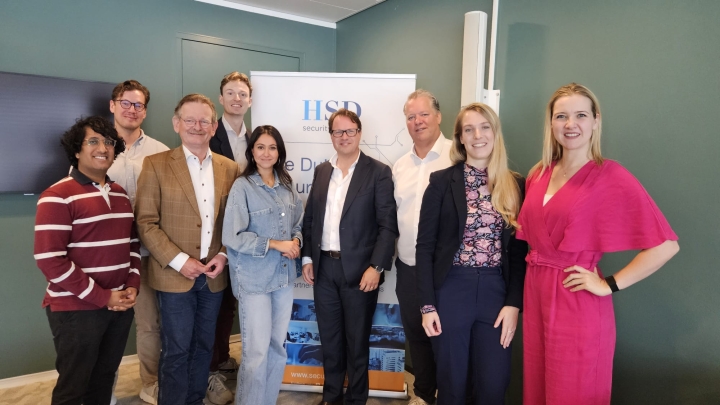
A broad consortium has received an RAAK-public grant for a two-year practice-based research project focused on improving the digital resilience of municipal operational technology (OT). The consortium includes The Hague University of Applied Sciences, Utrecht University of Applied Sciences, the municipalities of Eindhoven, Rotterdam, and Zoetermeer, the Association of Dutch Municipalities (VNG), the Information Security Service (IBD), TNO, Hudson Cybertec, and Security Delta (HSD).
Municipalities are increasingly concerned about the vulnerability of their critical infrastructure, such as systems for water management and traffic control. These systems are largely automated and use internet-based technology, making them susceptible to cyberattacks. Cyber incidents involving OT systems that control this infrastructure pose a real risk of societal disruption.
From Floodgates to Traffic Lights: Risks Close to Home
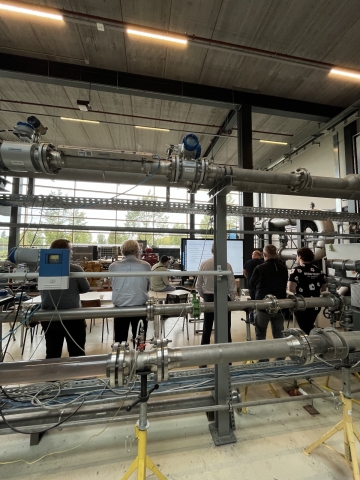
Operational technology is often physically spread across a municipality, located near the infrastructure it controls, such as bridges, locks, pumping stations, and traffic lights. These systems must function 24/7 and are designed to last for decades, making maintenance and security updates difficult. Many OT systems remain in use for 20 to 30 years and are hard to integrate with modern IT systems, resulting in increased vulnerabilities and compatibility issues with new digital infrastructure.
When a hack or malfunction occurs, the consequences can be severe, ranging from traffic chaos to flooding or public health risks. Recent incidents, such as hacked traffic lights and attempted digital intrusions on bridge control systems, show that these threats are not theoretical—they are already happening. Cybersecurity firms have long warned about the vulnerability of OT systems.
Practice-Based Research into Practical Solutions
The project focuses on the central question: How can municipal professionals, with the help of smart solutions, strengthen the cyber resilience of the operational technology behind their critical infrastructure? Within the consortium, researchers, students, and policymakers work together on concrete solutions, which will be developed and tested through two case studies: water management and traffic control.
The project will involve three senior researchers, fifteen researchers, and over 225 students. They will explore five sub-questions, addressing topics such as knowledge gaps, required competencies, the development of supporting tools for municipalities, and how to implement these tools in day-to-day municipal operations. The aim is to close the gap between policy and execution with smart, applicable solutions.
“Many municipal organisations recognise the urgency, but lack the appropriate tools and support,” says Emiel Kerpershoek, senior researcher at the Cyber Security & Safety research group at The Hague University of Applied Sciences. “Our ambition is to develop interventions through case studies that truly work in practice.”
New Legislation Increases Urgency
The need for action is further underscored by new legislation, such as the Dutch Cybersecurity Act. These laws require organisations to implement appropriate security measures for vital systems. Municipalities that fail to prepare adequately risk both societal and administrative consequences.
Building Digitally Resilient Cities Together
The strength of this project lies in the unique collaboration between municipalities, universities of applied sciences, research institutions, and cybersecurity practitioners. The insights gained will not only be applied within the participating municipalities but also integrated into education and shared through networks such as VNG and IBD. The Impact Coalition Safety & Security (ICSS) has adopted the project into its portfolio and actively contributes to the dissemination and application of the resulting knowledge. This creates a strong knowledge foundation for all Dutch municipalities. The consortium is thus taking an important step towards cities that are not only smart but also digitally resilient and future-proof.
This project is co-funded by Regieorgaan SIA, part of the Dutch Research Council (NWO).
Photo credits: Aneese
HSD Partners involved