Access to Innovation
 Access to Capital
 Access to Talent
 Access to Market
 Access to Knowledge

Hack the Power Grid: Wake-up Call for a Cyber-Secure Energy Transition

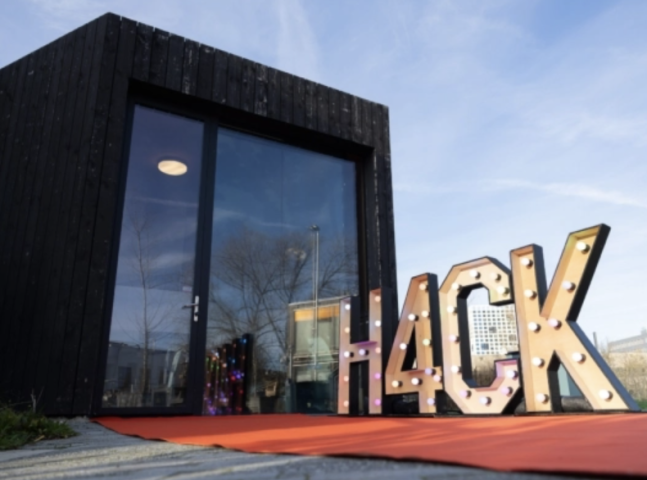
Today is the final day and the award ceremony of Hack the Power Grid, a hacking event at The Green Village in Delft, where students and professional white-hat hackers test the hardware and software of energy management systems (EMS) for vulnerabilities. In a controlled setting, risks are exposed that often go unnoticed in practice. This isn't a standalone initiative: it's part of a broader regional movement to make the energy transition digital, secure, and future-proof. In South Holland, businesses, knowledge institutions, and government agencies are collaborating on solutions which will become widely applicable.
Why cybersecurity is essential for the energy transition
The energy transition is leading to a growth of decentralised energy systems. Heat pumps, solar panels, home batteries and charging solutions are increasingly being controlled smartly via energy management systems connected to the cloud. This digitalisation is indispensable for flexibility and efficiency, but it also creates new weak links in the energy chain.
If one device or system proves vulnerable, it can lead to a cascade effect in the energy system due to interdependencies, where a small problem results in a series of multiple serious faults and vulnerabilities. Ensuring the security of communication between EMSs and underlying devices is therefore a system-critical prerequisite.
Innovation coalition lays the foundation for a cybersecure energy transition
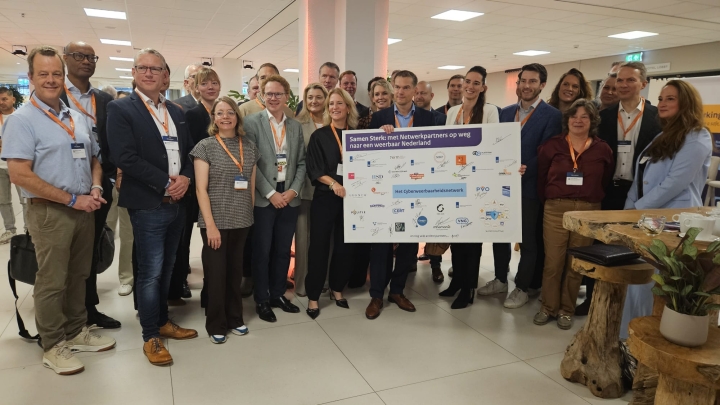
To tackle this challenge structurally, in July 2025 a broad innovation coalition was presented under the direction of the Economic Board South Holland (EBZ), consisting of grid operators, industry, knowledge institutions, governments and specialised companies. The joint goal: a ‘secure-by-design’ energy system in which cyber security is designed in and ensured from the outset.
To achieve this, the partnership focuses on testing solutions in (field) labs, applying them in practice, unlocking investment and financing opportunities, translating knowledge into concrete innovations and scaling these up into viable business models.
Arno Bonte, Deputy for Energy, Province of South Holland: "South Holland has a unique starting position to accelerate the energy transition. We combine a strong industrial base with high-quality knowledge institutions, advanced energy infrastructures, and leading test and lab facilities. In this region, companies, governments, and ethical hackers work closely together. We are preparing for the future by actively shaping it."
Digitisation of medium-voltage substation
The innovation coalition is currently working on two initiatives that directly contribute to a cyber-secure and future-proof energy landscape.
Within the EKOO scheme, the OPEN-MS project has started, carried out by coalition partners TU Delft, The Green Village and Technolution. In this project, the medium-voltage substation at The Green Village is being digitised using an open edge computer, and an open platform is being developed so that new functions can be easily added. In collaboration with network operators among others, the platform is being developed secure-by-design.
Ultimately, the aim is for the electricity network to operate locally autonomously and intelligently, taking into account local grid congestion and imbalance. The innovation coalition aims to create a physical demonstrator for further research and innovation.
Cybersecure decentralized energy hubs
Within the broader innovation coalition, a separate consortium has also been formed that focuses specifically on increasing the digital security of decentralized energy hubs. This group has submitted a project proposal to Kansen voor West for the development of innovative cybersecurity solutions for these hubs. The participating parties aim to develop and test solutions based on practical cases, together with SMEs and for SMEs.
By making decentralised energy hubs more cyber secure, not only is the energy transition accelerated, but new business opportunities for SMEs are also created. Furthermore, this contributes to an attractive business climate with a reliable decentralized energy supply to which entrepreneurs can safely connect.
Economic and social value
The urgency is high. Recent research by CE Delft shows that energy hubs in the Netherlands can deliver considerable social value. For the period 2025–2050, this value is estimated at €10.5 to €20.4 billion. A crucial part of this benefit comes from relieving the electricity grid: through smart use of energy hubs, an estimated 3.3 to 6.2 gigawatts of necessary grid reinforcement can be avoided. (Source: CE_Delft_240439_Mkba-energiehubs_Kernrapport_Def-1.pdf)
Joris den Bruinen, CEO of Security Delta (HSD) and member of the EBZ Digital Economy taskforce: “Through this joint effort, we are gradually building an energy supply that is both sustainable and digitally secure. The hack event underscores the need to identify risks early. Meanwhile, the coalition partners and consortia are creating concrete, practical solutions for the present, with a view to the long term. This results in societal impact with economic value.”

Hack the Power Grid
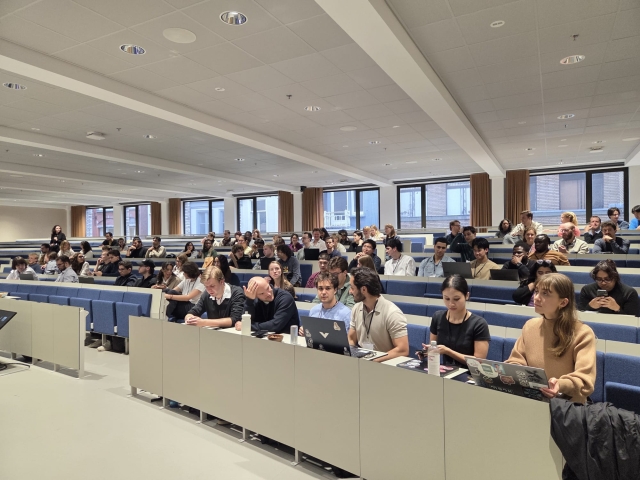
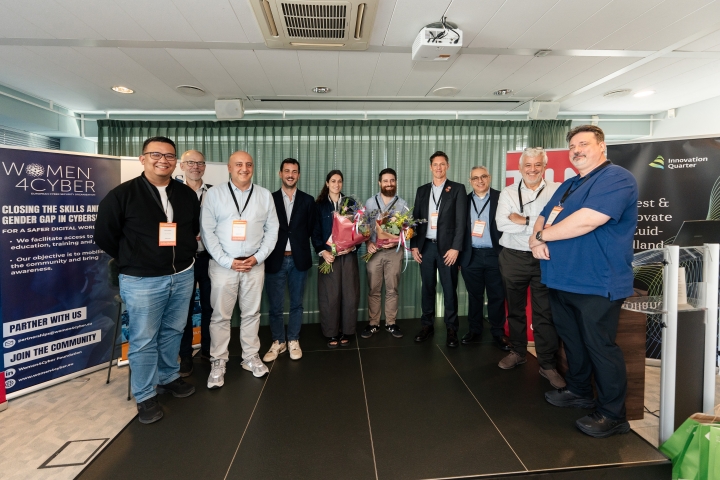
On 25 November and 4 December, the hack event Hack the Power Grid took place at The Green Village. The event was a collaboration between The Green Village and DIVD. Twenty-five students and ten professional white-hat hackers from the Dutch Institute for Vulnerability Disclosure (DIVD) tested four energy management systems (EMS) — both software and hardware — for vulnerabilities. Prior to the hacking, the students attended a masterclass on responsible hacking. The event concluded with an Award Ceremony with six prizes in three categories. Representatives of the Innovation Coalition for Cybersecure Energy Transition were also present.

Innovation Coalition for a Cybersecure Energy Transition
The coalition was founded in 2025 by Economic Board South Holland, TNO, TU Delft, KPN, Stedin, Batenburg Technology, Technolution, The Green Village, Province of South Holland, InnovationQuarter, and Security Delta (HSD) in collaboration with the Port of Rotterdam Authority, Westland Infra, Dutch Institute for Vulnerability Disclosure (DIVD), European Network for Cyber Security (ENCS), Greenport West-Holland, Top Sectors Energy and ICT, the municipality of The Hague, TU PowerWeb Institute, Living Lab Scheveningen, Campus@Sea, Sustainability Factory, and Hi Delta.
Photo's: The Green Village / Robèrt Kroonen
HSD Partners involved