Access to Innovation
 Access to Capital
 Access to Talent
 Access to Market
 Access to Knowledge

Key Insights Emerged at ENISA Cybersecurity Skills Workshop in Brussels!

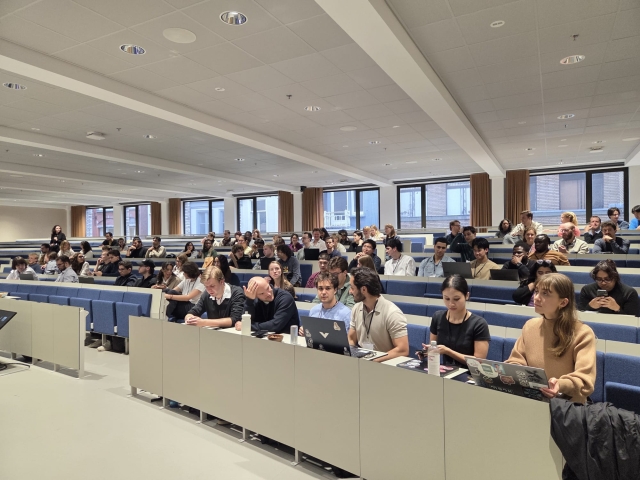
Last friday, the European Union Agency for Cybersecurity ENISA concluded a truly productive European Cybersecurity Skills Framework (ECSF) workshop in Brussels, bringing together 70 participants who represented 17 EU-co-funded projects, 3 nationally funded initiatives, and several national cybersecurity authorities. Participants showcased how ECSF is being applied across EU programmes, shared lessons learned, identified challenges and gaps, and provided recommendations on how to further advance cybersecurity skills in the EU. Mark Ruijsendaal (HSD) was invited to this workshop to share recents insights and contribute to the workshop on behalf of the CADMUS-project!
The European Cybersecurity Skills Framework (ECSF) is a tool to support the identification and articulation of tasks, competences, skills and knowledge associated with roles of European cybersecurity professionals. It is the EU reference point for defining and assessing relevant skills, as defined in the Cybersecurity Skills Academy. The ECSF describes 12 cybersecurity-related roles, which individually specify their corresponding responsibilities, competences, skills, synergies and interdependencies. It supports a common understanding of these roles, competencies, skills and knowledge mostly required in cybersecurity and the design of cybersecurity-related training programmes.
The ECSF goals are:
- a common terminology and shared understanding between the demand (workplace, recruitment) and supply (qualification, training) of cybersecurity professionals across the EU.
- Supporting the identification of critical skill sets required from a workforce perspective. It enables learning providers to design programmes that develop these essential skills and helps policy-makers implement targeted initiatives to address skills gaps.
- To facilitate an understanding of key cybersecurity professional roles and the essential skills they require, including soft skills and any relevant legislative aspects. In particular, it enables non-experts and HR departments to understand the requirements for resource planning, recruitment, and career development in support of cybersecurity needs.
- Promote harmonisation in cybersecurity education, training, and workforce development. At the same time, this common European language for cybersecurity skills and roles aligns well with the broader ICT professional domain.
- Contribute to the cyber resilience of organisations and society. It provides a standard structure and guidance for building cybersecurity capacity within the European workforce.
CADMUS-project
Mark Ruijsendaal (Security Delta (HSD)) was invited to this workshop to share recent insights and contribute to the workshop on behalf of the CADMUS-project together with other project representatives. The project utilises existing initiatives and offers in cyber security training to build upon and develop enhanced training curricula based on integrating proven training models and standards. It leverages the ECSF and underlying e-CF competence model to analyse the cybersecurity labour market, educational offerings, future needs development and gaps between them.
Wonderful interactions on Skills Gap Analysis, the use of the ECSF- and e-CF frameworks as well as development and certification of learning in cybersecurity were discussed in the presence of other EU-project representatives.
Mark Ruijsendaal: "We're on the right track, both with the Cadmus project, our combination of methodologies and as a country. I firmly believe that European cooperation on cybersecurity skills will benefit individuals, employers, training providers and help realise national and Europe’s ambitions."
The CADMUS-project aims to address the cybersecurity expertise shortage in Europe by developing targeted training opportunities based on approaches including cyber range projects, games, hackathons, bootcamps, and traineeships. These interventions upskill educators, trainers, SME and startup employees, civil servants as well as graduate students who target cybersecurity careers. The CADMUS consortium, comprised of 7 organisations based in Europe and led by the National Cybersecurity Authority of Greece, has received a 3-year grant to address the cybersecurity expertise shortage in Europe, end of 2024. With this grant of €3.14 million the consortium executes a € 6.3 million programme, co-funded amongst others by the Dutch Ministry of Economic Affairs/RVO and European Commission through the European Health and Digital Executive Agency (HaDEA) as part of the Digital Europe Programme.
The CADMUS consortium partners are the Centrum voor Veiligheid & Digitalisering (CVD) and Security Delta (HSD) from The Netherlands together with the Hellenic National Cybersecurity Authority (NCSA, Greece, coordinator), Computer Technology Institute and Press “Diophantus” (CTI, Greece), Algebra Bernays University (ABU, Croatia), Digital Security Authority (DSA, Cyprus) and European University Cyprus (EUC, Cyprus).
More information on the CADMUS-project here!

This project has received funding from the DIGITAL-2023-SKILLS-05-CYBERACADEMY under Grant Agreement No. 101190006.
HSD Partners involved