Access to Innovation
 Access to Capital
 Access to Talent
 Access to Market
 Access to Knowledge

How Can Smart Technology Enhance the Feeling of Safety in Urban Spaces?

You might recognise the scenario: walking through the city at night and choosing a well-lit route, or sharing your journey and estimated arrival via an app. Smart technology is playing an increasingly important role in how safe people feel in public spaces, but what is its actual impact?
More and more cities and organisations are exploring solutions such as reporting apps, smart lighting, and nudging techniques. These interventions promise increased safety and faster threat detection, but also raise questions about privacy, implementation, governance, and capacity. What works in practice, and what still needs refinement?
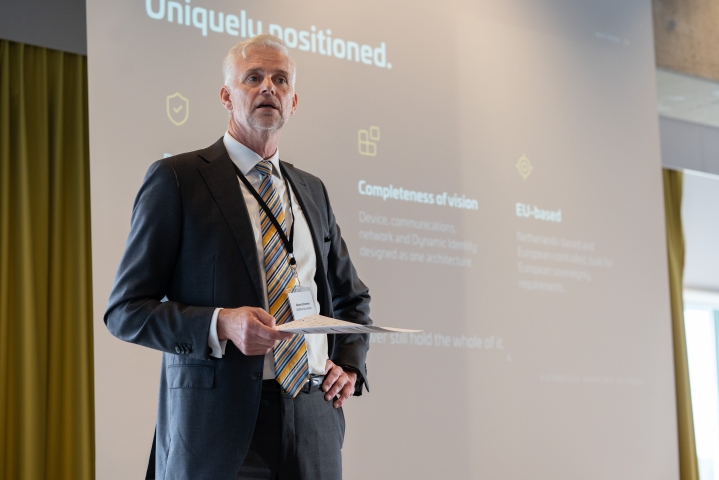
During the latest Smart Safety & Security Talk (ICSS), organised by the Impact Coalitie Safety & Security, Julie van Hekken presented key insights from a recent design session with public and private partners. The session was built on literature research commissioned by the ICSS. The central question was: how can smart technologies contribute to a greater sense of safety in the city, with a focus on women’s safety?
Understanding Street Harassment
Julie began by defining street harassment, which includes catcalling, sexually suggestive comments, unwanted touching, following someone, or blocking their path, both physically and via location-linked online channels. A key insight: street harassment is not an isolated issue; it is deeply intertwined with systemic inequality, social norms, and role patterns. For municipalities, a crucial first step is actively listening to women’s experiences. By taking these seriously, cities gain clearer insight into where and why insecurity is felt, forming the foundation for effective interventions.

Objective vs Subjective Safety
An important tension highlighted is the difference between objective and subjective safety:
- Objective safety refers to measurable incidents and is often part of broader societal problems that are not easily resolved.
- Subjective safety is about how safe people feel in public spaces.
A key lesson: objective safety cannot be improved solely through digital interventions. The combination with physical measures in the public realm is essential.
What Has Been Tried?
Existing interventions include:
Smart lighting (e.g., TU Eindhoven): improving sightlines and avoiding “dark spots.” Not only the quantity, but also the type and colour of light matters. Red light can feel unpleasant, whereas blue light often increases the perception of safety.

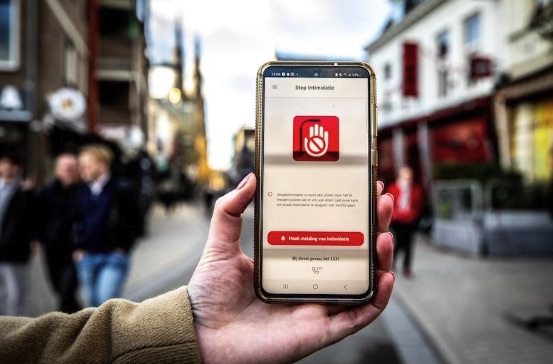
Reporting apps and platforms: apps must function reliably. In Eindhoven, the local reporting app has been successful. Experience shows it is better to start small and ensure the system works well locally before scaling up to national coverage or integration with larger apps.
Nudging: behavioural interventions, such as engaging bystanders or signalling social norms, are most effective in busy areas. Nudging can also directly influence offenders through subtle cues or warnings at strategic locations.
The Role of the Physical Environment
Digital solutions on their own are rarely enough to create a lasting sense of safety. The most significant impact is achieved when online tools are combined with thoughtful physical interventions. For example, cutting back shrubs to improve sightlines, carefully positioning benches, and designing pedestrian routes and gathering areas all contribute to a safer and more welcoming environment. When digital and physical measures reinforce each other, the result is a more effective and enduring improvement in public spaces.
What Works and What Doesn’t
Several factors determine whether interventions succeed. Initiatives are most effective when improvements are visible and tangible in the public space, genuinely enhance residents’ experiences, and are supported by clear ownership and responsibility. Active involvement from the community is also essential, ensuring that changes are understood, accepted, and maintained.
At the same time, challenges persist. Limited capacity and follow-up can hinder progress, and measuring perceived safety remains difficult. There is also a risk of “tech solutionism,” where technology is treated as an end in itself rather than a tool to support broader safety goals. Addressing these challenges requires a balanced approach that integrates digital innovation with practical, physical measures and community engagement.
From Idea to Impact
An effective approach requires a structured process:
- Clearly define the problem and objectives
- Select interventions that fit the local context
- Communicate transparently and involve residents
- Pilot, measure, learn, and scale
Example: Street Projections
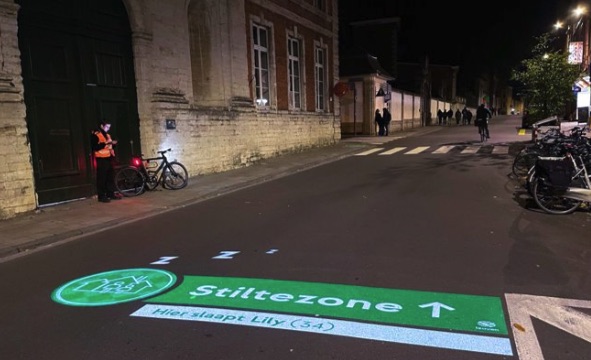
A pilot project in a nightlife district used light projections to enhance women’s sense of safety, displaying social-norm messages at carefully selected times and locations. This approach was effective because it focused on a specific problem rather than the technology itself, keeping implementation simple and manageable. The projections produced an immediate and visible effect, providing residents with a tangible sense of safety, and the concept also has the potential to be scaled and adapted for use in other municipalities.
Conclusion
The main takeaway: effectively addressing street harassment requires an integrated approach. Technology alone is not enough; the real impact comes from the interplay between behaviour, physical space, communication, and collaboration.
By listening to residents, especially women, and combining digital and physical interventions, municipalities can take concrete steps toward safer public spaces. Smart technology can support this process, but lasting results depend on thoughtful design, implementation, and community engagement.
Want to learn more? View the full Action Plan: Innovation for Safety Perception in Public Spaces for Municipalities and Partner (report in Dutch)
Impact Coalitie Safety & Security is a collaboration between municipalities, the police, knowledge institutions, businesses, VNG, and Security Delta. It acts as a catalyst and agenda-setting platform for cities, accelerating the adoption of smart city innovations that enhance urban safety and security. More info: https://veiligesmartcities.nl/
HSD Partners involved