Access to Innovation
 Access to Capital
 Access to Talent
 Access to Market
 Access to Knowledge

Recap HSD Café: AI: what constitutes a successful implementation of AI?
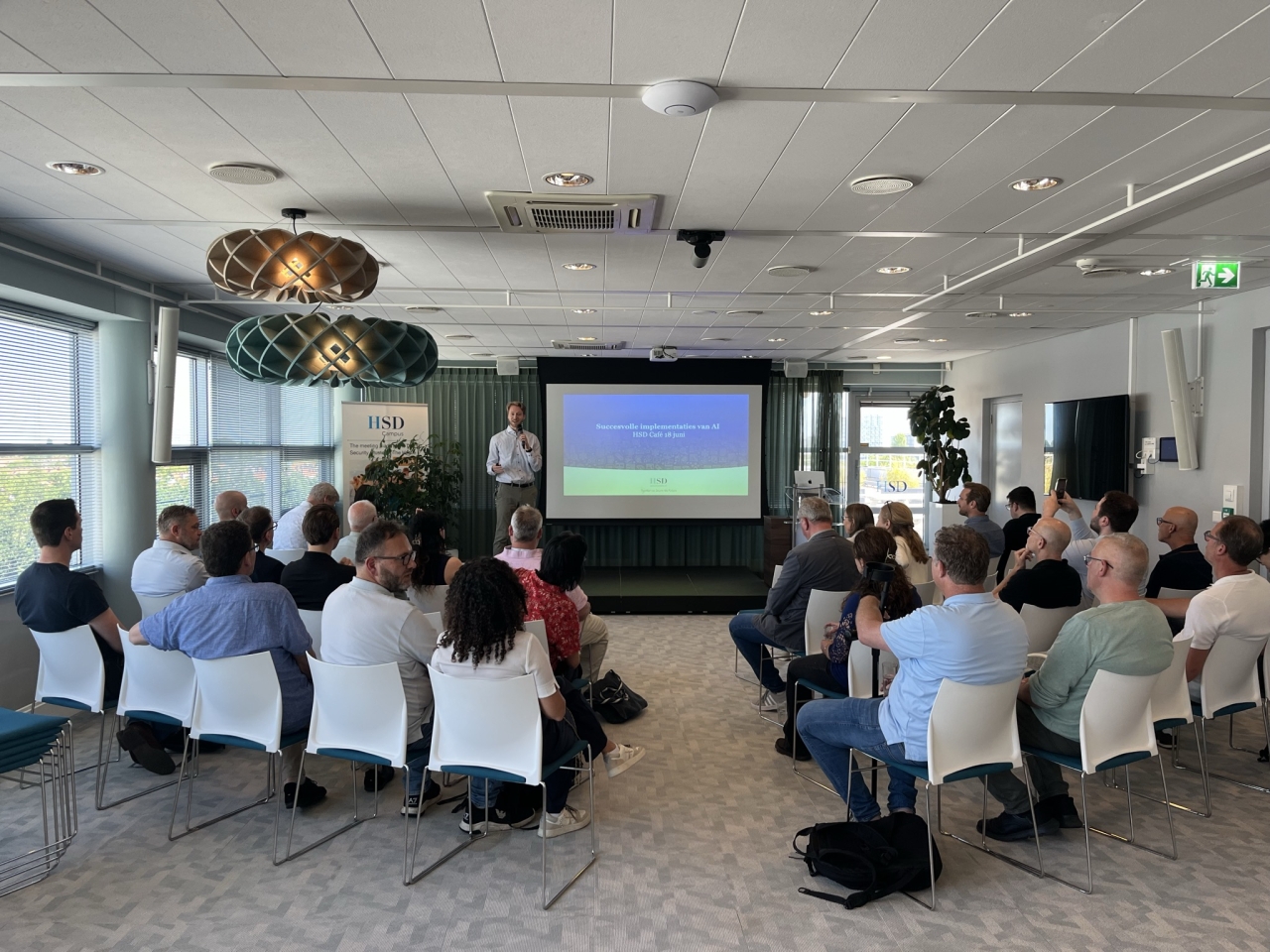
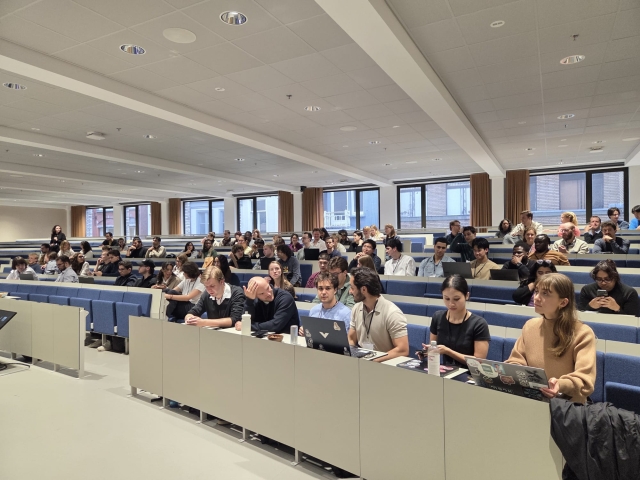
About 5 years ago, the question surrounding AI came down to whether we had pay attention to it or not. Today, that question comes down to how to best use AI in a meaningful way: during the HSD Café at the HSD Campus we discussed what constitutes a successful implementation of a sovereign AI solution, and which factors add to their success.
The session highlighted the importance of preparing both your organisation as well as the specific processes for which your AI solution is intended beforehand, as well as defining what you wish to improve through the implementation, to make sure it innovates on your current process.
Key insights from the speakers:
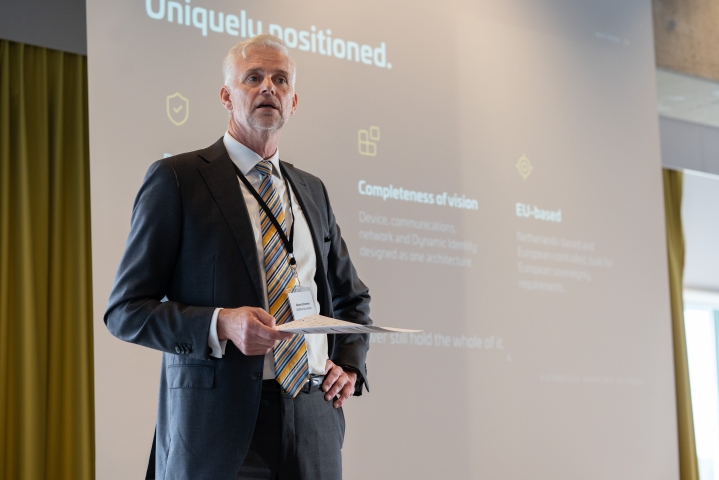
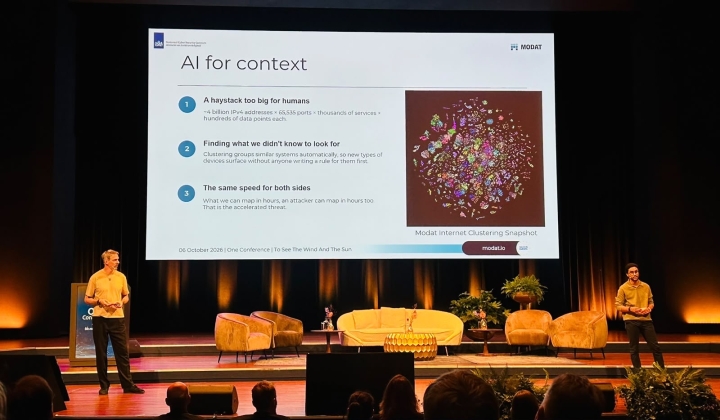
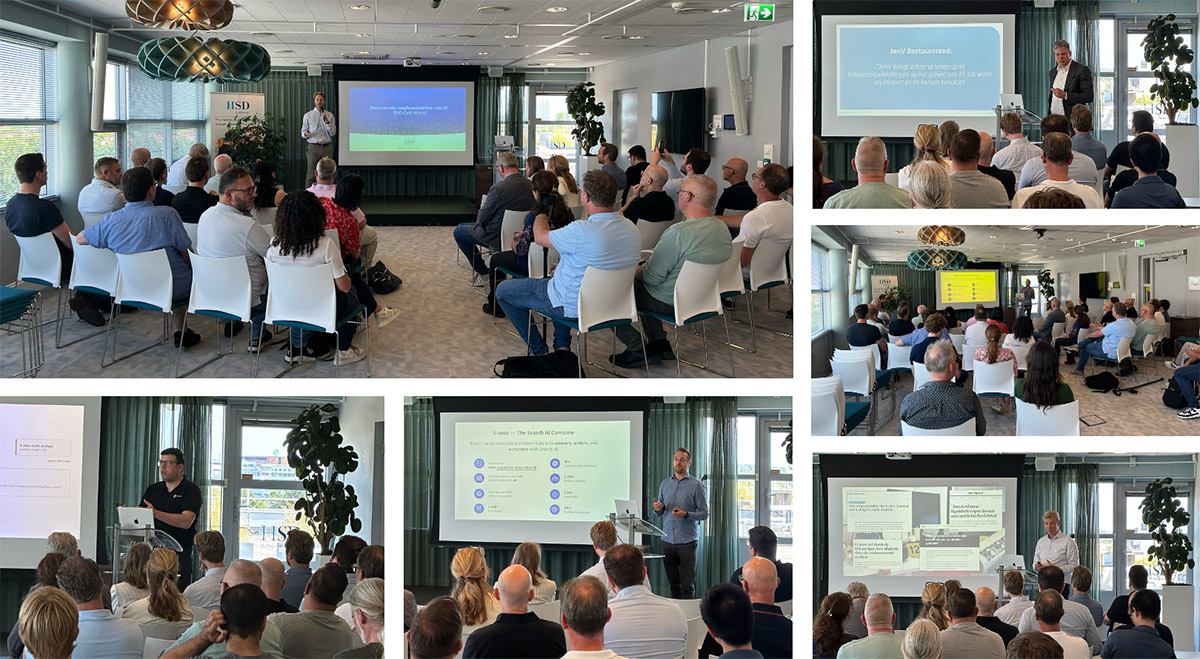
Arthur Eyckerman and Remco Sprooten (Director Architecture Solutions and Principal Security Research Engineer at Elastic): Arthur Eyckerman provided us with insight into the implementation of AI into Security Operation Centres (SOC), where introduction of AI means the traditional SOC is outdated against AI-powered adversies, requiring a layer of constant automation: an agentic SOC with human judgement for approval. From the research side Remco Sprooten explained the takeaways from building an AI triage pipeline to teach machines to reverse engineer malware, where he emphasised the importance of mixing models to come to objective findings, as models are still prone to hallucinations.
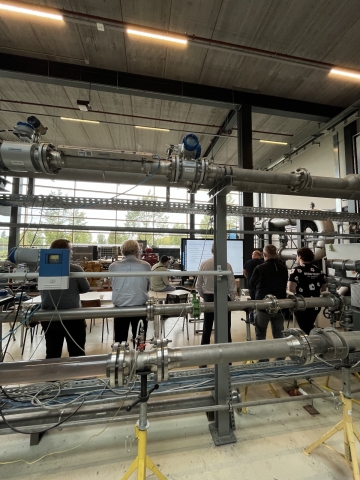
Hans Henseler (Professor Digital Forensics & E-Discovery at the University of Applied Sciences Leiden and senior advisor at the Dutch Forensic Institute (NFI)): Walking us through digital forensic platform Hansken and its opensource counterpart OpenHansken, Hans Henseler showed us how AI, superseded by close-knit international collaboration, large datasets and forensic transparency makes for a very potent tool for assisting law enforcements agencies. He highlighted that while LLM-answers may not constitute proof, they can provide hints in the form of hypotheses, clues and possible connection, which combined with human evaluation, looking at the input, process as well as the output, this use of AI provides tangible value to our law enforcement. Besides telling us all this, Hans showed us as well with a tour of the Forensic IoT lab on the HSD Campus.
Michel van Leeuwen (Director Artificial Intelligence at the Ministry of Justice and Security):
Last but not least, Michel van Leeuwen shared how AI transformation at the Ministry of Safety and Security has been and is taking place. He explained how successful AI adoption, such as with their AI Assistant Robin, consists of five components: strategy, technology, people, data and governance; balancing procurement and developing internally, responsible AI management, promoting AI literacy and an innovation culture, access to usable and quality data, and integrating an approach to AI-policy and risk management.
Key takeaways
Successful AI implementation requires a holistic approach that goes beyond the adoption of technology alone. Organisations need to carefully integrate AI into existing processes, while clearly defining the intended value and objectives to ensure that AI contributes to meaningful innovation. A structured approach is essential to maximise the benefits of AI while managing potential risks. This includes validating the complete AI lifecycle by carefully evaluating the quality and reliability of the input data, the processes through which AI generates outcomes, and the outputs themselves. Continuous monitoring and assessment are crucial to ensure that AI systems remain accurate, trustworthy, and aligned with organisational goals.
At the same time, people remain at the heart of successful AI implementation. While AI can enhance efficiency and enable new capabilities, its impact ultimately depends on how effectively it is adopted and used by people. Engaging employees, building relevant skills, and creating trust in AI-driven solutions are essential steps to ensure that AI becomes a valuable and practical tool within organisations. Combining technological innovation with human expertise and collaboration is therefore key to unlocking the full potential of AI.
Official report handover
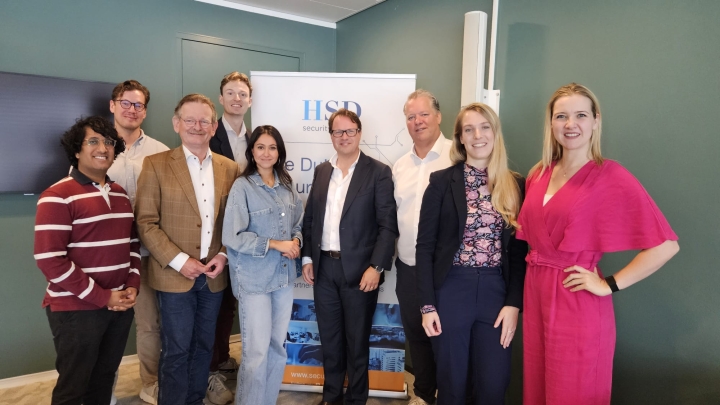
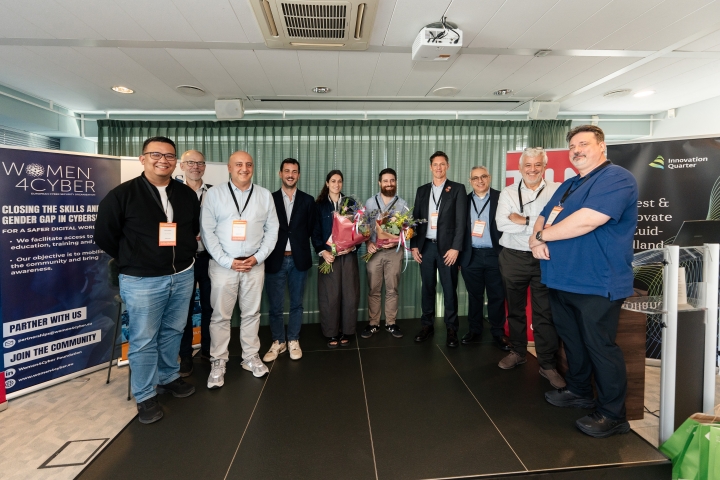
Besides interesting talks from our speakers, the report From Proof of Concept to Implementation: Success Factors for Scaling AI in the Security and Justice Domain was presented to Michel van Leeuwen, Director of AI at the Dutch Ministry of Justice and Security.
Security Delta would like to thank the speakers and participants for their valuable contributions and looks forward to future HSD Café events, where these important topics will continue to be explored.
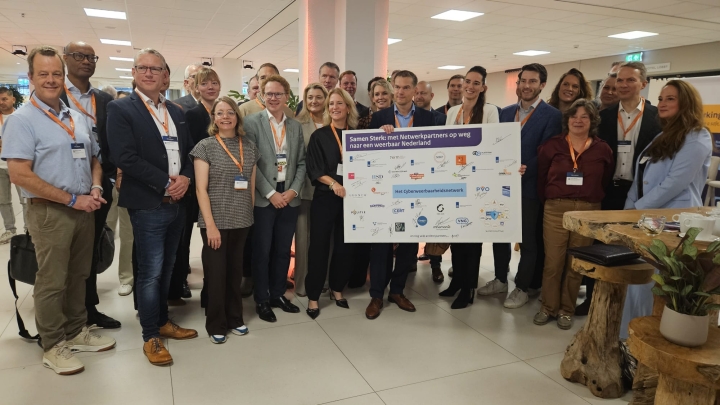
HSD Partners involved