Access to Innovation
 Access to Capital
 Access to Talent
 Access to Market
 Access to Knowledge

Recap HSD Café: New ABRO Security Requirements and What They Mean for Businesses Working with Government
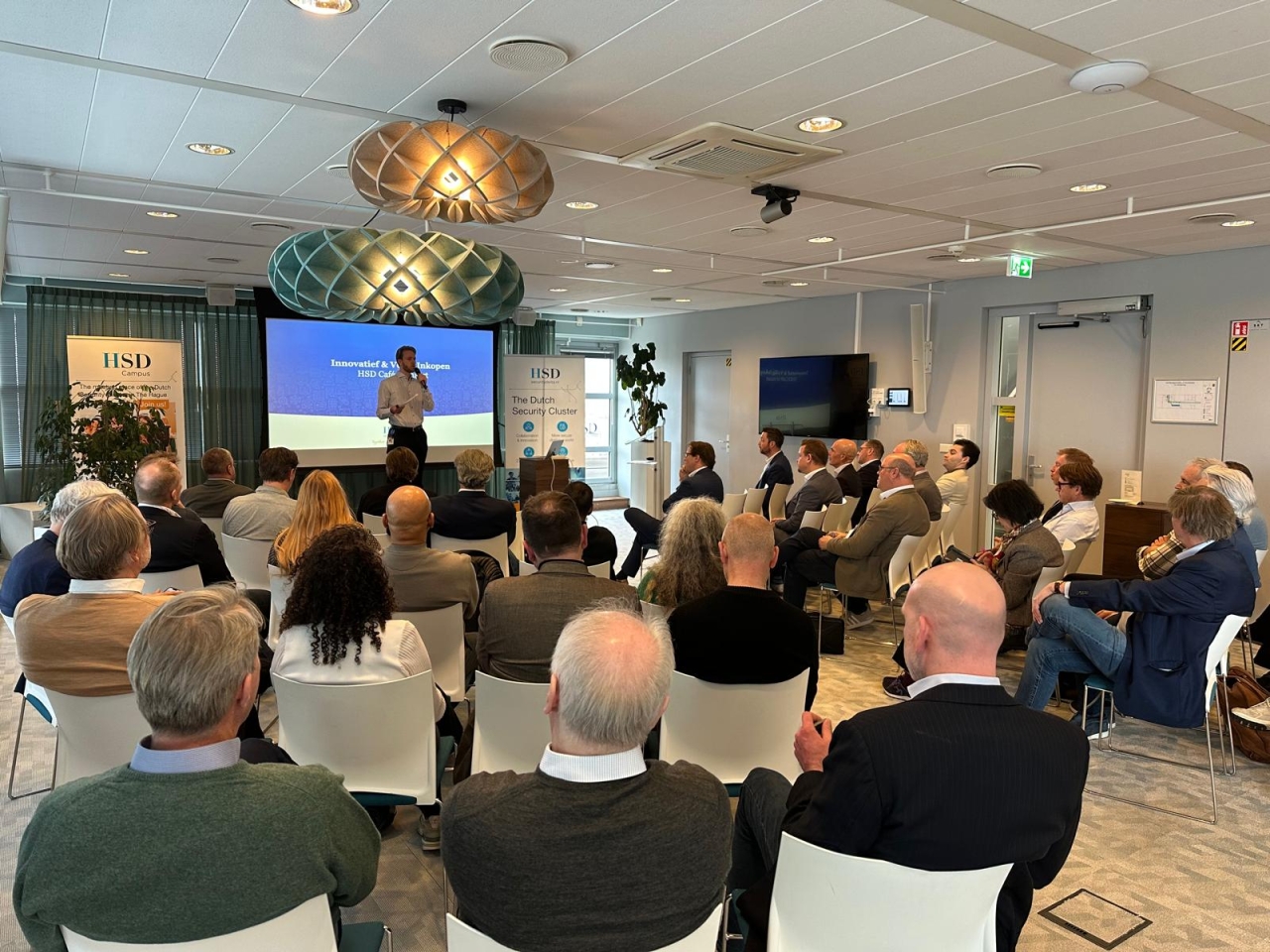
Collaborating with the government on projects that impact national security brings new responsibilities. For this reason, the first HSD Café of 2026 focused on the Algemene Beveiligingseisen voor Rijksopdrachten (ABRO) (General Security Requirements for Government Contracts), which came into effect on 1 January 2026. Experts from both government and industry discussed what these new requirements mean for businesses, how organisations can address them in practice, and what opportunities they create for innovation and collaboration with government.
The session emphasised that security requirements are not only a matter of compliance, but can also act as a driver for professionalisation, innovation, and a stronger Dutch security and defence ecosystem, one in which security becomes part of organisational culture rather than merely a requirement.
Below are the key insights from the session:
Ron Nulkes (Ministry of the Interior and Kingdom Relations): The background and impact of ABRO:
Ron Nulkes opened the session with an overview of the ABRO, offering additional insight from the Nationaal Bureau Industrieveiligheid (NBIV) (National Bureau for Industrial Security). At a time of increasing geopolitical tensions and growing digital threats, it is becoming ever more important that organisations working on projects affecting national security comply with clear and robust security requirements.
ABRO addresses several aspects of organisational security, including:
-
Personnel security
-
Physical security
-
Digital security
-
Secure use of cloud environments
Nulkes also explained the advisory role of the NBIV; it supervises compliance with ABRO among (prospective) contractors and advises government bodies when procuring security-critical projects. For businesses, this means that security is no longer a secondary condition, but an integral part of operations when collaborating with government on sensitive projects.
Jeroen Konijn (Sentyron): ABRO in practice for businesses:
Jeroen Konijn discussed what organisations can expect when they encounter ABRO requirements for the first time. Although ABRO has been developed into a clear and readable policy framework, contractors do not automatically gain a full understanding of the practical steps, requirements, and impact of an authorisation process. In practice, the implications can be substantial for both contractors and contracting authorities.
He explained how the process begins with an authorisation request submitted by the contracting authority to NBIV. At this stage, it must already be clear which risks and interests require protection. This information forms the basis of the security plan that the contractor must develop. For smaller companies in particular, security structures are often not yet organised at this level. As a result, appointing a dedicated security officer and developing a comprehensive security plan can require considerable effort. Konijn further described how personnel screening, building-related security measures, and digital security requirements often demand significant adjustments. Once these elements are in place, NBIV conducts an inspection and authorisation can be granted.
While this process can be intensive, Konijn emphasised that it also brings important benefits. Organisations become demonstrably more secure, benefit from NBIV’s expertise, and develop a stronger internal security culture.
He concluded by highlighting the strategic advantage of meeting ABRO standards. Because security measures are formally assessed and verified, trust grows among supply-chain partners and contracting authorities. Operating at ABRO level also strengthens resilience against more serious threats, providing organisations with greater certainty and stability.
Maurice van Rooijen (Ministry of Defence): Innovation-driven and industry-strengthening procurement:
Maurice van Rooijen explained how procurement strategies can contribute to both innovation and the strengthening of the Dutch industrial base. He discussed how innovation-focused and industry-strengthening procurement is an integral part of the defence strategy and contributes to a stronger defence ecosystem.
Instruments such as Defport and the Defence Innovation Authority play an important role in this approach. Through strategic procurement and collaboration with innovative companies, the Ministry of Defence can stimulate technological development, support the scaling of innovative solutions, and strengthen the national ecosystem for security and defence. Van Rooijen emphasised that collaboration between government, industry, and knowledge institutions is essential to make the Netherlands more resilient and innovative in an increasingly complex security landscape.
Key takeaways
The introduction of ABRO marks an important step in strengthening the security of government contracts that affect national security. For businesses, this brings new requirements, but also new opportunities to transform security from a compliance obligation into an organisational culture. By investing in security, collaboration, and innovation, companies can not only meet regulatory demands but also contribute to a stronger and more resilient Dutch security and innovation ecosystem.
Security Delta would like to thank the speakers and participants for their valuable contributions and looks forward to future HSD Café events, where these important topics will continue to be explored.
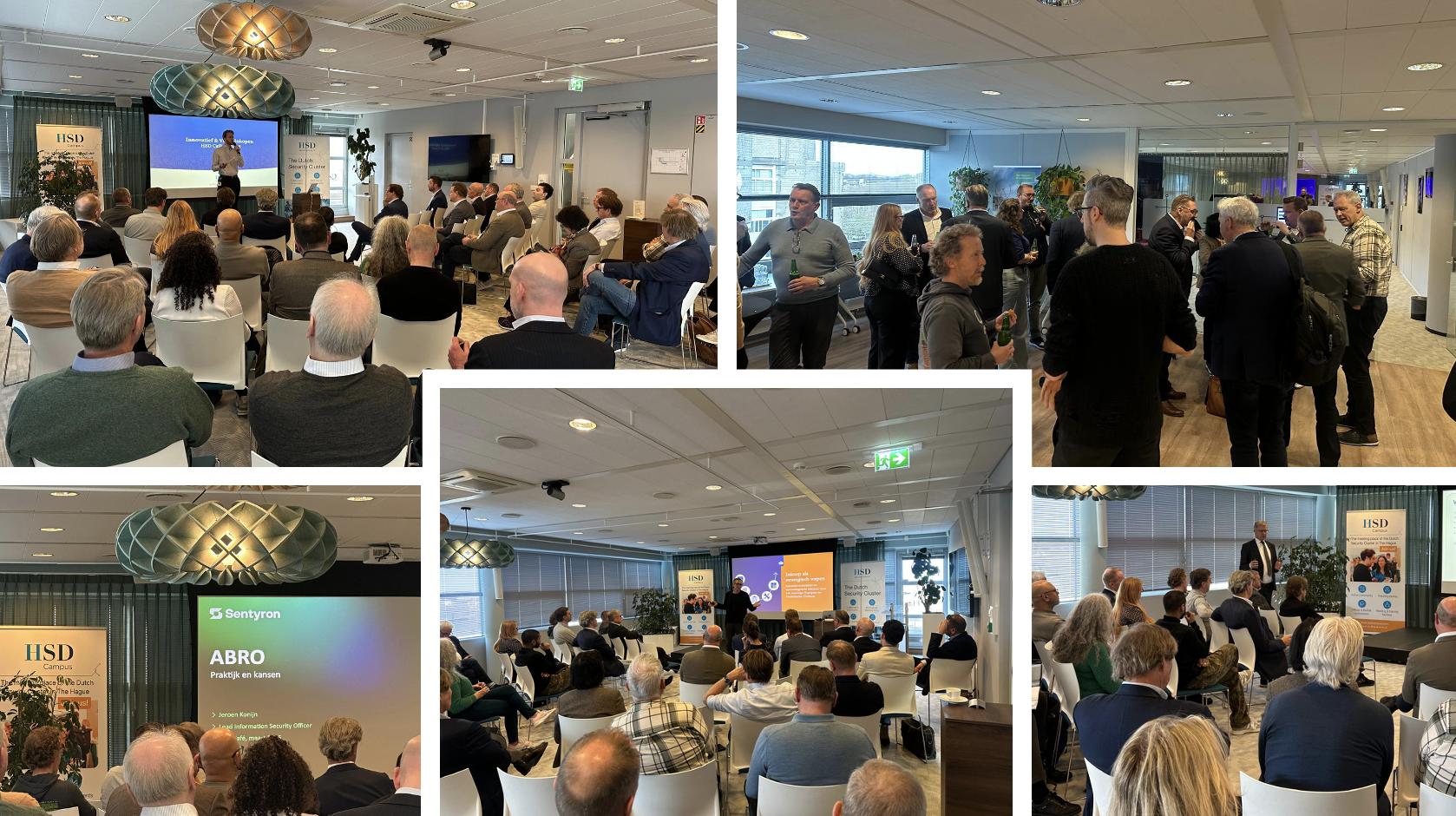
Several times a year, we organise an HSD Café around a key security topic. The HSD Cafés serve to inform the network about the latest developments and opportunities, but also to discuss challenges. The HSD Cafés are organised by HSD Office and are open to professionals, experts, students, and all who are interested.
HSD Partners involved