Access to Innovation
 Access to Capital
 Access to Talent
 Access to Market
 Access to Knowledge


Platform Stad Explores the State and Future of The Hague’s Economy
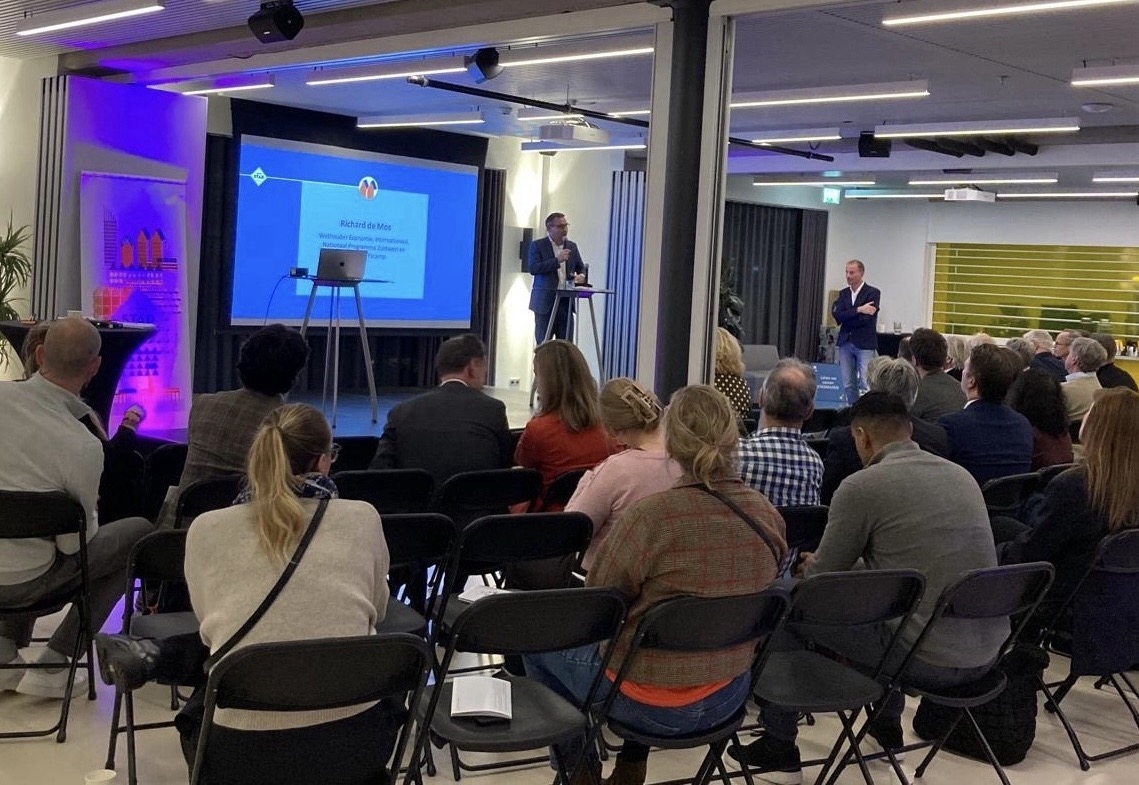
The report, published annually by the Municipality of The Hague, provides insights into the city's economic development and broader economic prosperity. It was prepared by Dr Walter Manshanden (NEO Observatory), Prof. Dr Frank van Oort (Erasmus University Rotterdam), Prof. Dr Henri de Groot (Vrije Universiteit Amsterdam) and Prof. Dr Martijn Burger (Erasmus University Rotterdam).
Exploring The Hague’s Knowledge Economy
The programme focused on several key themes, including the current state of The Hague’s economy, the future of its knowledge economy, economic participation and income development, and the spatial economic transformation of the region. Walter Manshanden presented an overview of The Hague’s economic landscape, followed by Frank van Oort, who addressed the future development of the city's knowledge economy, with particular attention to sectors, skills and educational levels.
The presentation highlighted that The Hague’s economy has experienced strong growth over the past 30 years, while its sectoral specialisation has remained relatively unchanged. Government and service sectors continue to dominate, with growth emerging at the intersection of sectors such as ICT, cybersecurity, international services, GovTech and defence.
Attention was also given to the potential of innovative applications within the local economy, for example through living labs. The presentation further emphasised the interdependence of The Hague and the wider region, including Delft, in terms of economic development, services, housing, spatial planning and accessibility.
Following this presentation, Joris den Bruinen (Security Delta (HSD)) and Prof. Nitesh Bharosa (GovTech & Innovation, TU Delft) reflected on the opportunities and challenges arising from these economic developments. For the security cluster, cross-sector collaboration and the practical application of security innovations offer opportunities for further development and growth.
Henri de Groot (Vrije Universiteit Amsterdam) addressed the challenges surrounding economic participation and income development among a large group of The Hague’s residents. Colette Muchall (Florence Zorg) and Marianne Toussaint (ROC Mondriaan) shared their reflections on these challenges.
The programme continued with a discussion between Erik Pasveer (independent expert in urban development strategy) and Gert-Joost Peek (Rotterdam University of Applied Sciences and ASRE) on the spatial and economic transformation of The Hague and the wider region.
The event concluded with reflections and a forward-looking perspective from Richard de Mos, Alderman for Economic Affairs, International Affairs, the National Programme for Southwest The Hague and the Escamp district.
Connecting Research, Business and Policy
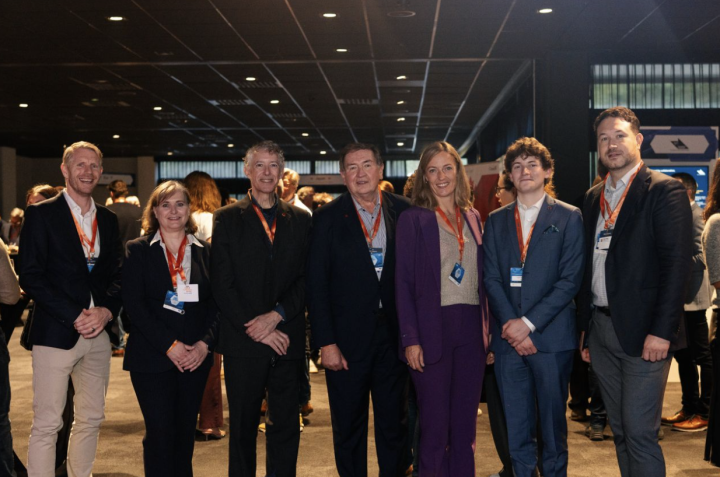
The STADgesprek provided an opportunity to bring together perspectives from research, business, education and policymaking. By connecting the findings of the economic monitor with experiences from different sectors, the event encouraged dialogue on the future development of The Hague’s economy.
HSD Partners involved