Access to Innovation
 Access to Capital
 Access to Talent
 Access to Market
 Access to Knowledge

How the ‘IT Verband Zuid-Holland’ talent programme helps students learn from practice
The shortage of cybersecurity professionals calls for new ways of developing talent. Within IT Verband Zuid-Holland (ITVZH), public and private partners are working together to strengthen IT and cybersecurity talent for SMEs in South Holland. The programme focuses on improving the connection between education, the labour market and industry, so that students, professionals and entrepreneurs have the knowledge and skills needed in an increasingly digital economy.
From Cyber Resilience Centre Greenport (CW Greenport), Lieve Lubbe and Josephine van Luik contribute to this effort. By speaking with entrepreneurs every day about digital security, they gain insight into the challenges organisations actually face. This practical knowledge is not only used to make entrepreneurs more resilient, but also provides valuable input for education and talent development.
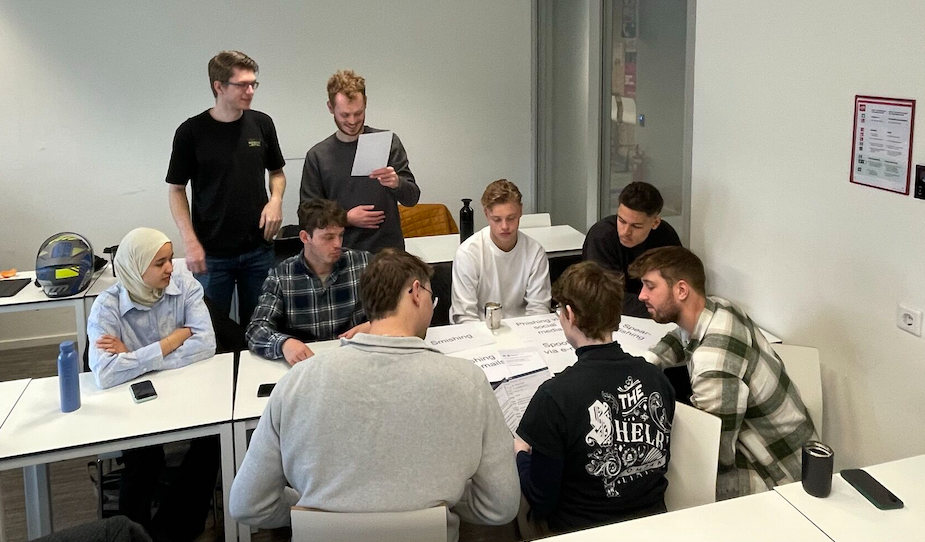
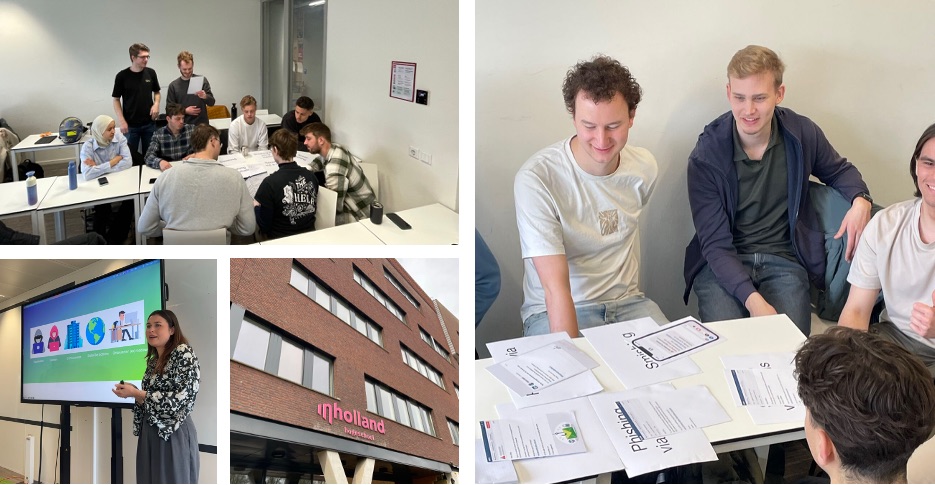
Using real-life examples from sectors such as horticulture, CW Greenport helps students experience how cybersecurity challenges manifest themselves in practice and which knowledge and skills are required. A recent example was the workshop “Digital security in the energy chain: the horticulture sector as a lens”, in which students from Inholland University of Applied Sciences in Alkmaar explored the impact of digital security on organisations, supply chains and business operations. We asked Lieve and Josephine about the impact they are creating through this programme.
Student Tom: “Now I finally understand the impact of cybersecurity.”
Why is it important for students to become familiar with SME-related challenges?
“Cybersecurity is often seen as a technical field, but in practice it is just as much about people, processes and collaboration. That is precisely why students need to engage with real challenges from the workplace. Within CW Greenport, we speak with entrepreneurs every day who are working on digital security. We hear what questions they have, what difficulties they encounter, and which decisions they need to make. By sharing this practical experience with students through ITVZH, they gain a much more realistic view of their future professional field.
That is exactly the strength of ITVZH: bringing education and industry closer together. Students learn from current real-world examples, while educational programmes can better align with the knowledge and skills that SMEs need. This gives students better preparation for practice and ultimately benefits organisations by providing professionals who understand what is happening in the field.”
What has practice taught you about the need for cybersecurity knowledge?
“One important lesson is that awareness alone is not enough. Entrepreneurs mainly want to know which concrete steps they can take. That is why we actively gather needs through conversations, meetings, evaluations and our cybersecurity baseline assessment. This assessment maps how digitally resilient an organisation is at that moment. Based on these insights, we develop practical support such as workshops, knowledge sessions, guidelines, checklists and crisis exercises.
At the same time, these experiences reveal which knowledge future professionals need. Within ITVZH, this practical knowledge gets a second life. What we learn from entrepreneurs is brought back into education. As a result, students work on challenges that SMEs are facing today, and educational programmes become better aligned with labour market needs.”
You recently organised a workshop for students on digital security in the energy chain. Why this topic specifically?
“The workshop showed how cybersecurity connects different sectors. Horticulture is an interesting practical case because companies are becoming increasingly dependent on digital systems and are part of complex energy and production chains.
For students, this made it clear that cybersecurity goes far beyond technology alone. It affects business continuity, collaboration within supply chains, legislation and regulation, and societal resilience.
By bringing these kinds of practical examples into education through ITVZH, students experience how relevant their future field of work is. This makes the step from theory to practice much smaller.”
What made the biggest impression during that session?
“What struck us was how quickly students connected theory and practice. As soon as you use a concrete example, cybersecurity becomes much more tangible.”
This was also reflected in the response of student Tom, who participated in the workshop:
Tom Baas, student at Inholland University of Applied Sciences Alkmaar: “The workshop clearly showed how much impact a mistake in cybersecurity can have. It is not only about technical problems, but also about consequences for business continuity, reputation and an organisation’s finances. At the same time, we gained insight into the measures companies can take to protect themselves. That made the topic very concrete.”
“For us, this response confirms exactly why ITVZH is so important. Students not only develop technical knowledge, but also learn to understand the impact cybersecurity has on organisations and society. This ensures that they start their careers better prepared and that employers will have professionals who understand practice.”
What do entrepreneurs notice about the cyber resilience centre’s approach?
“Entrepreneurs often indicate that they need direction and practical guidance. A good example is the experience of Dorus de Graaf.
Dorus de Graaf, IT Manager at Van Egmond Lisianthus: “From the baseline assessment onwards, we immediately gained insight into how to ask the right questions to our IT partner. With the tools and knowledge provided by Cyber Resilience Centre Greenport, we gained direction and confidence to improve our digital resilience in a structural way.”
For us, this shows that practice and education reinforce each other. Entrepreneurs become more resilient, and the experiences they gain are brought back to students. In this way, ITVZH creates a continuous exchange of knowledge between industry and education, from which both benefit.”
What is the most important lesson for the cybersecurity professional of tomorrow?
“Technology is never separate from the environment in which it is applied. Future cybersecurity professionals must of course possess technical knowledge, but it is at least as important that they understand how organisations operate and which risks entrepreneurs experience. By exposing students to real practical challenges during their education, they learn to look beyond technology alone. They develop insight into business processes, collaboration within supply chains and the societal impact of digital security.
That is the added value of ITVZH: by connecting education, entrepreneurs and professionals, we train people who are not only technically skilled, but who can also add value directly to organisations. In doing so, we strengthen both the cybersecurity talent of tomorrow and the digital resilience of South Holland.”
“In addition, the collaboration contributes to the sustainable embedding of digital security in education. Thanks to this partnership, three vocational (MBO) and higher professional (HBO) horticulture programmes have now incorporated digital security structurally into their curriculum. This ensures that practical knowledge from the field is permanently embedded in education and contributes to a lasting strengthening of digital talent in the horticulture sector.”
All activities have been made possible in part through a Katapult/RVO grant and co-financing from various partners.
ITVZH is an initiative of WE-IT, Security Delta (HSD), Dutch Innovation Factory and IT Campus Rotterdam.
HSD Partners involved