Access to Innovation
 Access to Capital
 Access to Talent
 Access to Market
 Access to Knowledge

DronePort Rotterdam: Building a Smart, Secure and Autonomous Port

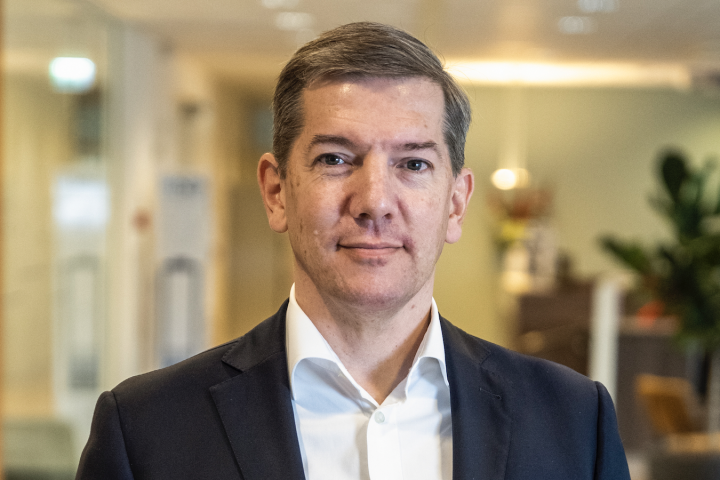
During the Smart Safety & Security Talk on 26 June organised by the Impact Coalitie Safety & Security (ICSS), Arthur Dallau shared an inspiring glimpse into the work and ambitions of DronePort Rotterdam, which has been operational for 1.5 years. At the heart of his talk was the Future Port Detection programme, designed to make Rotterdam, Europe’s largest port, stretching over 42 kilometres, future-proof and digitally secure.
An Ecosystem for Innovation
DronePort Rotterdam is designed as a public-private innovation ecosystem with over 50 collaborating partners, including customs, fire brigade, police, defense, and various startups. Within the operational setting of the port, partners experiment with new technologies. What proves successful is scaled up. The focus is on short-cycle innovation, including R&D projects with trainees and PhD candidates.
Multidomain Governance
The ambition: a smart, secure, and autonomous port. To achieve this, DronePort Rotterdam collaborates with the Port of Rotterdam Authority and other partners towards a multidomain governance structure, represented in a digital boardroom. All stakeholders have a seat at the table, enabling coordinated and integrated decision-making.
Future Port Detection
The Future Port Detection programme focuses on testing and deploying new sensors — above, on, and under water. Results aren’t just documented in reports but immediately translated into real-time visualisations such as digital twins, videos, or holograms. This direct translation supports fast decision-making and requires smart applications of AI, for instance, to automatically analyse millions of drone images.
Drone Data Space & Strategic Autonomy
One key priority is the creation of a secure drone data space, enabling reliable, controlled, and future-proof data sharing. To realise this, DronePort is partnering with a company also used by the Ministry of Defence in international operations. At the same time, investments are being made in Dutch-made drone technology and software to increase strategic autonomy and reduce dependency on the USA or China.
Dual Use and Interoperability
The concept of dual use – allowing multiple stakeholders to use cameras and sensors under their respective legal mandates – is essential. The interplay between civilian applications and defense innovations opens up new possibilities. One example is a “5 drones in 1 box” system, where drones fly autonomously 24/7 while others recharge.
Hotspots and Test Locations
Two hotspots have been established in the port area, complete with test and experience centers. While radar-based detection on the water has become standard, there's still a significant innovation gap for detection above and below water – a key focus area for DronePort Rotterdam.
Invitation: Drone Horizon 2025
Arthur Dallau concluded with an invitation to Drone Horizon, the annual event hosted by DronePort Rotterdam, taking place on 4 and 5 September. The event will showcase the latest developments and test results and offers space for networking, inspiration, and collaboration.
The Impact Coalitie Safety & Security is a collaboration between municipalities, police, knowledge institutions, companies, VNG, and HSD Office. The collaborative initiative aims to unite forces with the police and municipalities to deploy smart technology and digitalisation effectively for a safe and livable society. The focus is on scalable and economically sustainable solutions, with results and lessons learned actively shared and utilised.
HSD Partners involved