Access to Innovation
 Access to Capital
 Access to Talent
 Access to Market
 Access to Knowledge

From Smart Doorbells to Public Space: Data, Privacy and Responsibilities
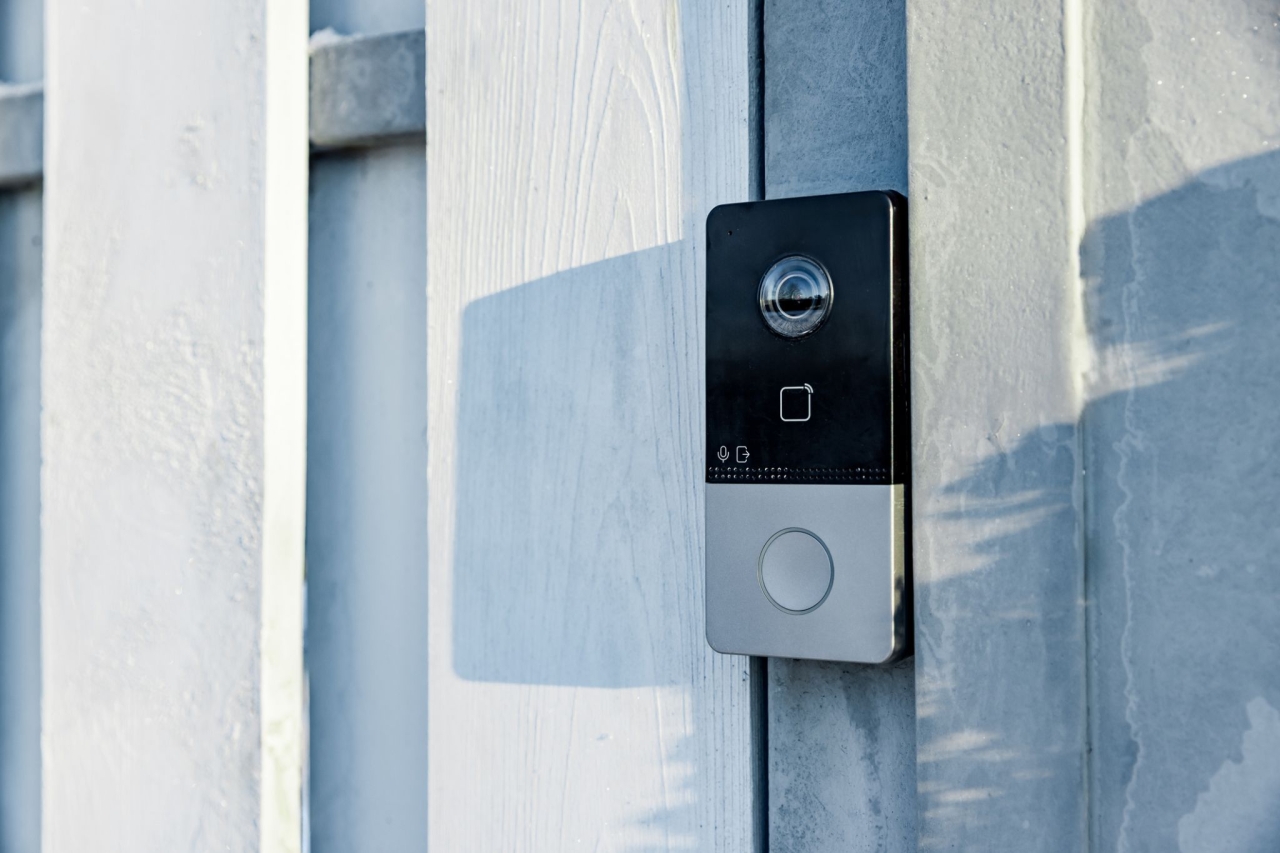
A smart doorbell may seem like an innocent gadget. You can see who is at the door, keep an eye on a parcel delivery and leave home with peace of mind. But when millions of privately owned cameras collectively capture more and more of public space, a much bigger issue arises. Who decides what is recorded, who has access to the footage, and where is the boundary between individual safety and collective privacy?
On 24 September, Vincent Böhre (Privacy First) discussed data processing by smart devices, privacy and digital autonomy during the Smart Safety & Security Talk of the Impact Coalition Safety & Security. The smart doorbell served as a concrete case study for a development that reaches far beyond the front door.
From convenience to a network of privately owned cameras
The Netherlands has a relatively high number of smart doorbells. For many users, the added value is clear: a sense of security, control over what happens around the home and convenience, for example when receiving parcel deliveries.
At the same time, smart doorbells often record more than just the front door. Depending on the settings, passers-by, neighbours and parts of public space may also come into view. Some devices also record sound and store footage.
Individually, this may seem like a small intrusion. Taken together, however, something else emerges: a fine-grained network of privately owned cameras that increasingly observes public space.
This creates an interesting paradox. The same technology that people themselves experience as useful and safe can, from the perspective of the person walking past someone else’s front door, be experienced as an invasion of privacy.
Privacy is not just a matter of awareness
An important conclusion from the Smart Doorbells Consortium is that users are not always aware of exactly what their device does. Which parts of the surroundings are being filmed? How long is footage retained? Is sound also recorded? Who can access the footage and can it be shared?
Simply providing users with better information is therefore probably not enough.
An important part of the solution lies in privacy-by-design. Manufacturers can take privacy into account as early as the design stage, for example by using privacy-friendly settings by default, limiting detection zones and making privacy zones or masking easy to configure.
The option not to store footage by default, or to store it for as short a period as possible, can also reduce the risk.
The question therefore shifts from “what may the user do with the technology?” to “why is the technology not designed from the outset in such a way that privacy is better protected?”
Who provides oversight?
This brings us to the next question: who is responsible when smart doorbells systematically film public space?
When it comes to privacy and compliance with the GDPR, oversight lies with the Dutch Data Protection Authority (Autoriteit Persoonsgegevens, AP). Municipalities cannot use the GDPR themselves as a legal basis for enforcement. At the same time, municipalities may encounter situations in which the use of cameras touches upon public order.
This makes the boundary an interesting one. When does camera use remain an individual matter and when does it become a collective problem?
Consider a dispute between neighbours in which cameras lead to escalation and unrest across an entire neighbourhood. Or situations in which a camera records a large part of public space for an extended period of time.
And what happens when a smart doorbell or other camera is aimed at a police station, fire station or town hall? In that case, in addition to privacy, questions arise concerning security, public order and the protection of sensitive locations.
The Smart Talk made it clear that many questions still remain in this area. Not every doorbell that films a small part of public space automatically constitutes a public-order issue. But when private cameras begin observing public spaces on a large scale, it becomes increasingly important to have a clear understanding of where responsibilities lie and what instruments municipalities have at their disposal.
Municipalities therefore have a possible role not only in enforcement. Information and awareness are also important. Many residents primarily see their smart doorbell as a tool for safety and protection. For them, it is not self-evident that filming part of the street can also have consequences for others.
Digital autonomy: where does the footage go?
Another theme during the Smart Talk was digital autonomy. Many smart doorbells on the Dutch market come from American or Chinese technology companies. This raises the question of what happens to the data collected, where footage is stored and who ultimately has control over this information.
Privacy First also sees a broader European challenge here. There is momentum for European, privacy-friendly alternatives that give users more control over their data.
This touches on a bigger issue than just the smart doorbell. Who owns the technology, where data are processed and which default settings are used partly determine how much digital autonomy citizens actually have.
The smart doorbell is only the beginning: the discussion does not stop here.
Drones, smart glasses, connected cars and other IoT and AI applications are increasingly capable of observing their surroundings. As a result, it is becoming increasingly normal for private technology to collect data in public space.
The smart doorbell shows what happens when technology is adopted more quickly than the social frameworks around it can be developed.
This calls for a broader approach in which technology companies, governments, regulators and civil society organisations work together to consider the conditions for responsible use.
Privacy should not only become an issue once a product is already being used on a large scale. It should be part of the design, part of companies’ policies and part of the way in which we as a society deal with technology in public space.
The broader question
The smart doorbell is therefore more than a consumer product. It is a concrete case study of a development that will only become more relevant in the coming years:
How do we organise public values when private technology increasingly observes public space?
This question is not only about privacy. It is also about digital autonomy, security, responsibility and the role of public and private parties.
That is precisely why it is important not to start thinking about these issues only once new technology has become widely established. The discussion around smart doorbells shows that the social and administrative frameworks should ideally develop alongside the technology and, where possible, even anticipate it.
Interesting links:
https://responsiblesensinglab.org/nl/projecten/slimme-deurbellen-consortium
https://privacyfirst.nl/artikelen/resultaten-nationaal-onderzoek-slimme-deurbellen/
https://vng.nl/nieuws/gemeenten-kunnen-beperkt-reguleren-op-slimme-deurbellen
https://veiligesmartcities.nl/hoe-kan-de-slimme-deurbel-nog-slimmer/
The Smart Safety & Security Talks of the Impact Coalition Safety & Security bring together current developments and practical experiences, providing an opportunity to share knowledge and engage in dialogue.
The next Talk will take place on Thursday 29 October and will focus on digital sovereignty for municipalities. What does digital sovereignty mean for municipalities and what choices and opportunities do they have to take greater control themselves?
Curious about what digital sovereignty means for your municipality? Register for the Talk on 29 October via: https://securitydelta.nl/events/hsd-events/smart-safety-security-talk-de-gemeente-zonder-big-tech-2026-10-29
Photo credits: iStock/wmaster890