Access to Innovation
 Access to Capital
 Access to Talent
 Access to Market
 Access to Knowledge


Bridging Research and Practice to Strengthen Cyber Resilience

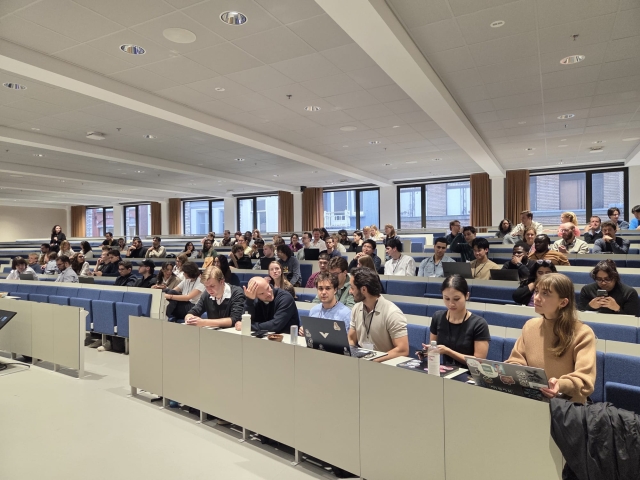
How can research and practice reinforce each other in tackling cybercrime? On Thursday 29 October 2026, researchers and professionals gathered at The Hague University of Applied Sciences for the event ‘Samen werken aan cyberweerbaarheid: regie op dader- en slachtofferschap’. The event focused on strengthening cyber resilience among citizens and businesses, addressing both the prevention of cybercrime and its impact on victims. It was organised by Cyberweerbaar NL, the Centre for Crime Prevention and Safety (CCV), the Cyber Offender Prevention Squad (COPS) and Security Delta (HSD).
Cybercrime Extends Beyond the Digital World
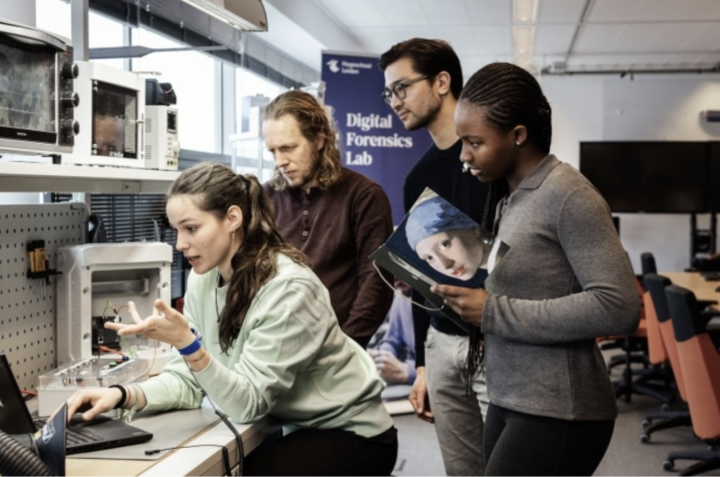
The morning programme highlighted the contributions of future professionals, showcasing 12 research articles written by students from NHL Stenden University of Applied Sciences, Saxion University of Applied Sciences and Avans University of Applied Sciences, in collaboration with Cyberweerbaar NL. The articles explored topics including digital skills, cybercrime victimisation and the impact of digitalisation on the democratic rule of law.
Together, they demonstrated how collaboration between educational institutions can contribute to responsible innovation and cyber resilience. Robby Roks, Associate Professor of Criminology at Erasmus School of Law, delivered a keynote on platform-enabled crime, highlighting how social media platforms can facilitate criminal activities and the importance of addressing both online and offline dimensions of crime.
A key message from his presentation was that crime cannot always be clearly divided into online and offline activities. Digital technologies have become deeply embedded in criminal behaviour, requiring an approach that considers not only technological developments but also the social factors involved.
Bringing Research and Practice Together
During two rounds of interactive breakout sessions, participants explored a range of topics related to cyber resilience. Discussions covered practice-oriented research into cybercrime offending, approaches to online youth crime and the role of the police in offender prevention.
Other sessions addressed digital skills, cybercrime victimisation and the skills needed to bridge the gap between research and practice.
Researchers and professionals from organisations including The Hague University of Applied Sciences, Saxion University of Applied Sciences, NHL Stenden, COPS and the CCV shared their knowledge and practical experiences. The sessions provided opportunities to exchange perspectives and explore how research findings can contribute to more effective approaches to preventing and addressing cybercrime.

HSD Café: Cybercrime from a Business Perspective
The afternoon programme featured an HSD Café, organised by Security Delta (HSD), focusing on cyber threats affecting small and medium-sized enterprises (SMEs), the impact of cyber incidents and the practical steps businesses can take when faced with an attack.
Tom Moester (Hunt & Hackett) discussed the evolving cyber threat landscape and explained why smaller businesses are increasingly attractive targets for cybercriminals. He highlighted how cybercrime has become more professionalised, with criminals specialising in different stages of an attack, and how artificial intelligence is making existing attack methods faster, more scalable and increasingly convincing. His presentation emphasised that cybercriminals look for opportunities rather than focusing solely on the size of an organisation.
Robin van Sambeek (NFIR) addressed the human impact of cyber incidents, highlighting the emotional and psychological consequences for business owners and employees. Beyond financial losses and operational disruption, cyber incidents can create significant stress, uncertainty and long-term challenges during recovery. He also emphasised the importance of supporting affected organisations and their personnel.
Yolanda van Setten (Cum Sensu) explored the forensic and legal considerations following a cyber incident. Her presentation addressed the importance of reporting incidents to the police, preserving digital evidence and understanding the different legal reporting obligations that may apply. She highlighted why businesses should consider these aspects when preparing their incident response procedures.
Together, the three presentations demonstrated how technical, human and legal considerations are interconnected when businesses experience cybercrime. They also highlighted the importance of preparation, appropriate support and informed decision-making in strengthening cyber resilience among SMEs.

Continuing to Strengthen Cyber Resilience Together
The event concluded with a networking reception, giving participants the opportunity to continue discussions, exchange experiences and explore potential opportunities for collaboration.
By bringing together researchers and professionals, the event helped bridge the gap between academic research and everyday practice. It highlighted the importance of sharing knowledge, strengthening cooperation and translating research findings into practical approaches to improving cyber resilience among citizens and businesses.
Read the collection of student research articles: Cyberweerbaar NL – Student Research Articles 2025–2026
HSD Partners involved